
Report · November 2026 · PDF in Spanish
Climate policy no longer demands sacrifices: it is a promise of a better future. Five measures to make the green transition and the industrial revolution the backbone of a national project.
Instituto Meridiano
November 2026
Xan López, economic analysis
xan.lopez@institutomeridiano.org
Marta Montojo, public relations and communications
marta.montojo@institutomeridiano.org
José Luis Rodríguez, organisation
joseluis.rodriguez@institutomeridiano.org
With the renewable revolution, Spain has won the geographic lottery.
For years climate policy seemed loaded with sacrifices and renunciations that were hard to ask of the majority. That has changed dramatically: we are witnessing a global technological transformation in how energy is produced and consumed, and for most working people on the planet electrification is today the fastest route to development and prosperity.
Spain starts from a position no neighbouring country can match. It has abundant sun and wind and some of the cheapest electricity in Europe. But it is also especially vulnerable to the climate crisis —droughts, wildfires, heatwaves— and depends on fuels imported from countries often ruled by autocrats.
Ahead of the 29 November elections, this document proposes five measures so that this advantage reaches people: a sovereign fund built on the wealth of the sun and the wind, making the richest pay, fossil-free comfort and mobility for working people, cheap energy to repopulate Spain’s emptied interior, and a country cared for against fire and drought.
70%
of the energy Spain consumes comes from fossil imports: we are only 30% sovereign.
×3.6
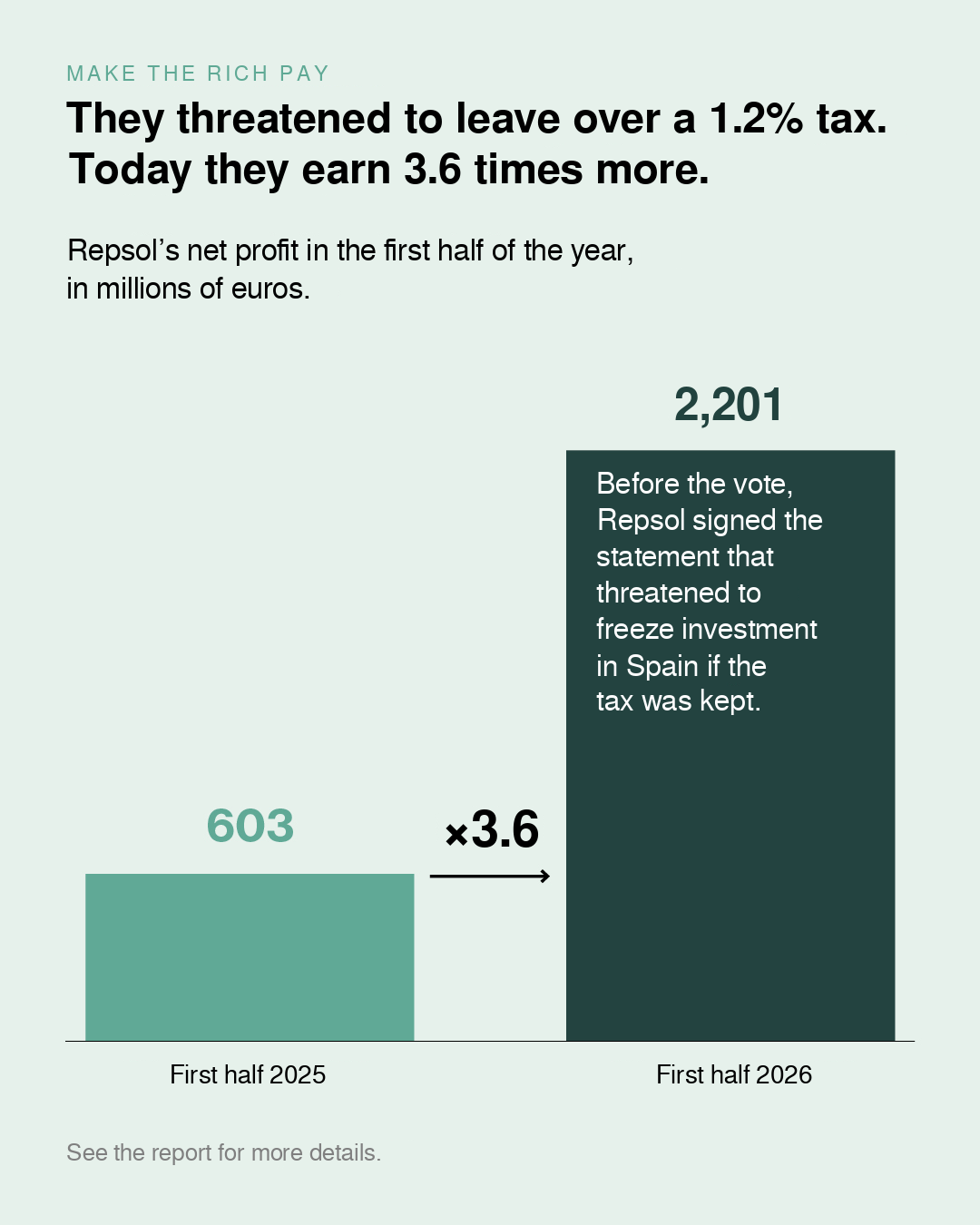
growth in Repsol’s first-half profits in 2026, after the 1.2% levy on large energy companies was voted down.
320 years
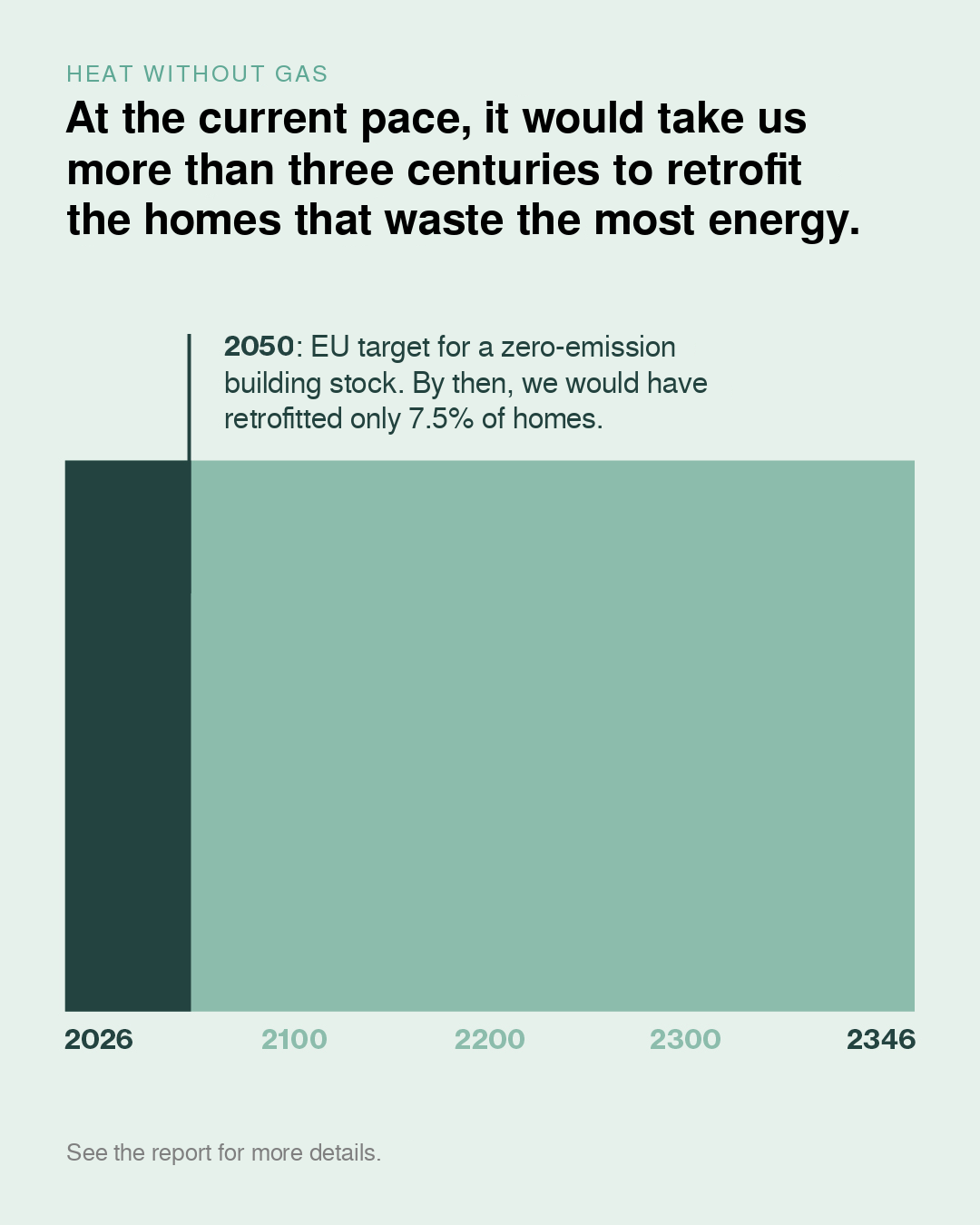
is how long it would take, at the current pace, to retrofit the homes that waste the most energy.
392,000 ha
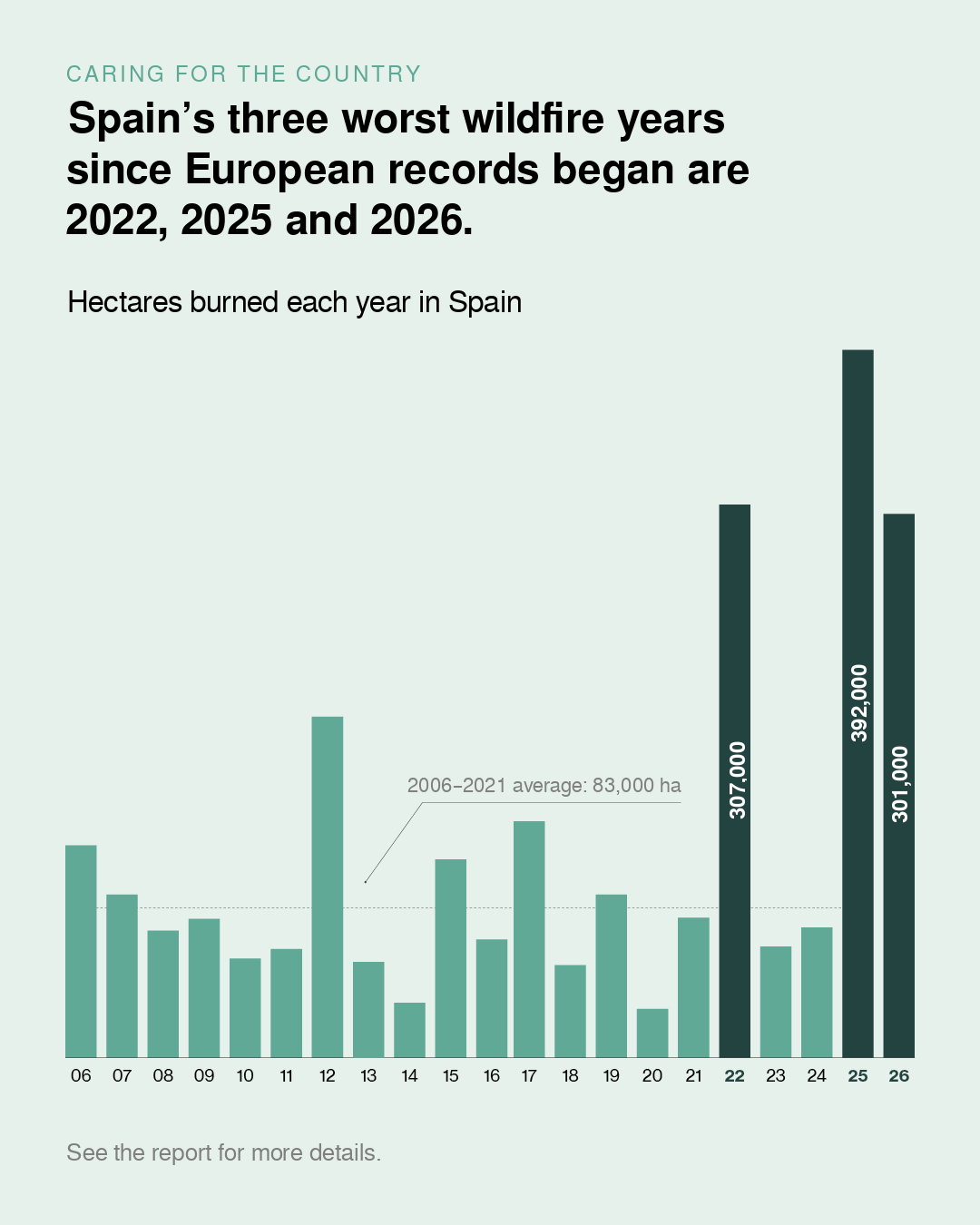
burned in 2025, Spain’s worst wildfire year since European records began.
Executive summary
1
Climate policy no longer demands sacrifices: it is a promise of a better future. It is not only necessary to contain the ecological crisis: it is also the starting point for a future of prosperity, sovereignty, abundance and security for working people.
2
If 70% of our energy depends on imports of fossil fuels from countries ruled by autocrats, we are a country that is only 30% sovereign. With decarbonisation we can be 100% sovereign.
3
The climate dangers facing Spain are enormous, but our country has solar and wind resources that its neighbours cannot match. The renewable revolution and green industrial policy can put Spain at the head of the productive transformation Europe needs.
Our proposals
01
A Renewable Sovereign Fund fed by the reservoirs, public stakes in large plants and windfall profits.
02
A 33% tax on the windfall profits of large energy companies and a 2% annual levy on fortunes above 100 million euros.
03
A 0×100×100 Renove Plan for electric cars and a Clima-Hogar (Climate-Home) Plan to retrofit apartment buildings.
04
Electrifying the countryside and building industrial districts where renewable energy is produced.
05
Civilian Climate Corps and payments to farmers for caring for forests, soil and water.
Global context
For years climate policy seemed laden with grim problems that we had to take responsibility for through sacrifices and profound changes to how we live. The situation, however, has changed dramatically. Climate policy no longer carries a demand for sacrifice, but a promise of a better future.
The capacity to manufacture clean technology has grown in a way that was unforeseeable until recently. These innovations are not only avoiding the consumption of millions of barrels of oil every day: as their prices fall, huge sections of the population are able to access them. The volatile, unequal and obsolete fossil economy now faces a competitor that is superior in every way: less polluting, more democratic, more efficient, safer and cheaper.
The fact that more than 70% of the energy consumed in Spain still comes from fossil imports leaves us at the mercy of the whims of the often authoritarian leaders of the great fossil powers. Sunlight and wind, by contrast, do not pass through straits that can be closed, nor do they take weeks to reach port. That is why this technology does not just offer us cheaper energy: these are machines of freedom.
What is at stake is whether, as has so often happened in our country, we fall behind in the great economic transformations, or whether we join an industrial revolution that is already under way and deploy it democratically, redistributively and with shared abundance. The dilemma for Spain is clear: abundance or desert.
Spanish context
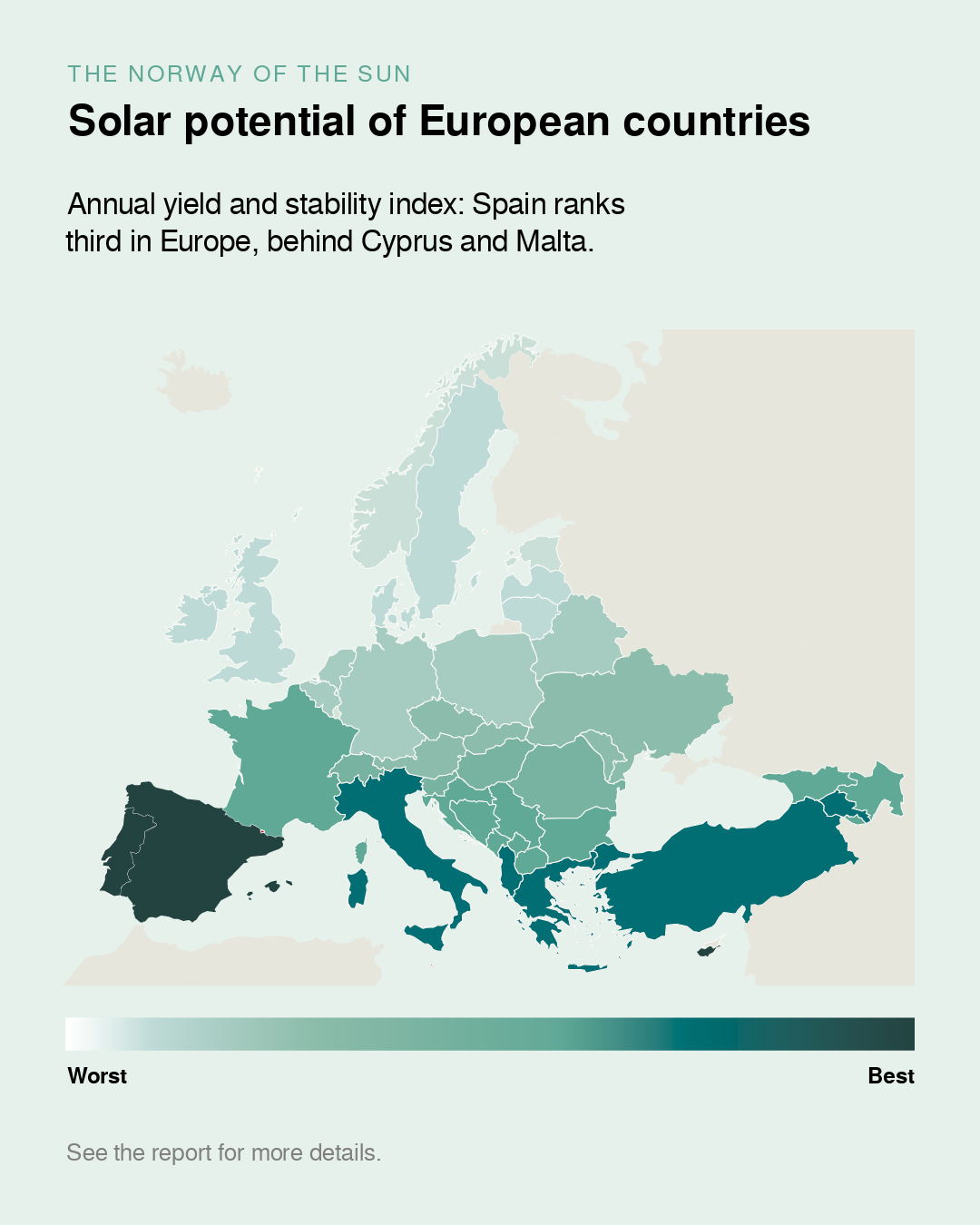
The risks of the climate crisis are especially serious for a country like ours: droughts, torrential rain, uncontrollable wildfires, endless heatwaves and accelerating desertification. That is why it is so important not to brake the transition, and to adapt to a new climate with the full strength of the public sector. But at the same time, with the renewable revolution Spain has won the geographic lottery.
If Europe’s economic power over the last two centuries was born in the coalfields of the continent’s central countries, decarbonisation will push Europe to rely on its wind and solar corridors. Most industries look for two things: cheap energy and regulatory stability. With abundant renewable resources and sufficient infrastructure, Spain can offer the first; with a government able to lead the green industrial revolution, it should be able to offer the second.
There can be no prosperity, and no progressive policy with strategic vision, that does not make the green transition and the industrial revolution the backbone of a national project: raising living standards, modernising jobs, expanding the welfare state, rebuilding emptied regions and speeding up adaptation to a new climate.
Measure 1
In the 1970s, Norway and the United Kingdom found oil in the same sea. Norway decided to save the profits in a sovereign fund that is now worth 1.85 trillion euros, around 320,000 euros for every Norwegian, and that sustains one of the most advanced welfare states in the world. The United Kingdom spent it, and today lives with austerity and cuts.
Spain now has its own oil, but renewable: the sun and the wind. We propose creating a Renewable Sovereign Fund that belongs to everyone, fed by three sources:
As in Norway, the Fund’s capital is not touched: only its returns would be spent, to finance the 21st-century welfare state —public housing, pensions, a universal care system—, and a share would always go to the towns where the power stations and plants are located.
Measure 2
In recent years most people have paid war prices for fossil fuels, while fossil companies multiplied their profits. When Congress tried to regulate this, those same companies threatened to choke off investment in the country. Out-of-control inequality is the greatest enemy of the energy transition. We propose two complementary measures:
A tax on windfall fossil profits. 33% of the profits of large fossil companies (oil, gas and electricity) in years when profits are well above the historical average.
A climate contribution from the largest fortunes. An annual tax of 2% on wealth above 100 million euros —the so-called Zucman tax—, with no exemptions. All the revenue would go to replacing boilers and combustion cars and to speeding up the transition for those with the fewest resources.
Measure 3
Home heating and road transport are the highest-emitting sectors in our country, and their prices are subject to the warlike whims of a handful of autocrats and oligarchs. With a tax reform paid for by fossil profits, the State can roll out two major plans without asking the majority for sacrifices.
0×100×100 Renove Plan. The State would pay dealers the equivalent of the VAT on 100% electric cars until 100% of vehicles sold are electric: zero VAT in practice, with no paperwork or waiting. For lower-income families, social leasing of electric cars at 100 euros a month, and support to swap an old car for a second-hand electric one.
Clima-Hogar (Climate-Home) Plan. The State would advance 100% of the cost of retrofitting the apartment buildings that need it most: heat pumps instead of gas boilers, air conditioning, insulation and rooftop solar. A public office would handle everything, and the cost would be repaid from part of the savings on bills: you will never pay more than you pay today. Families with the fewest resources would repay nothing, and tenants would be guaranteed that the works will not be used to raise their rent.
Measure 4
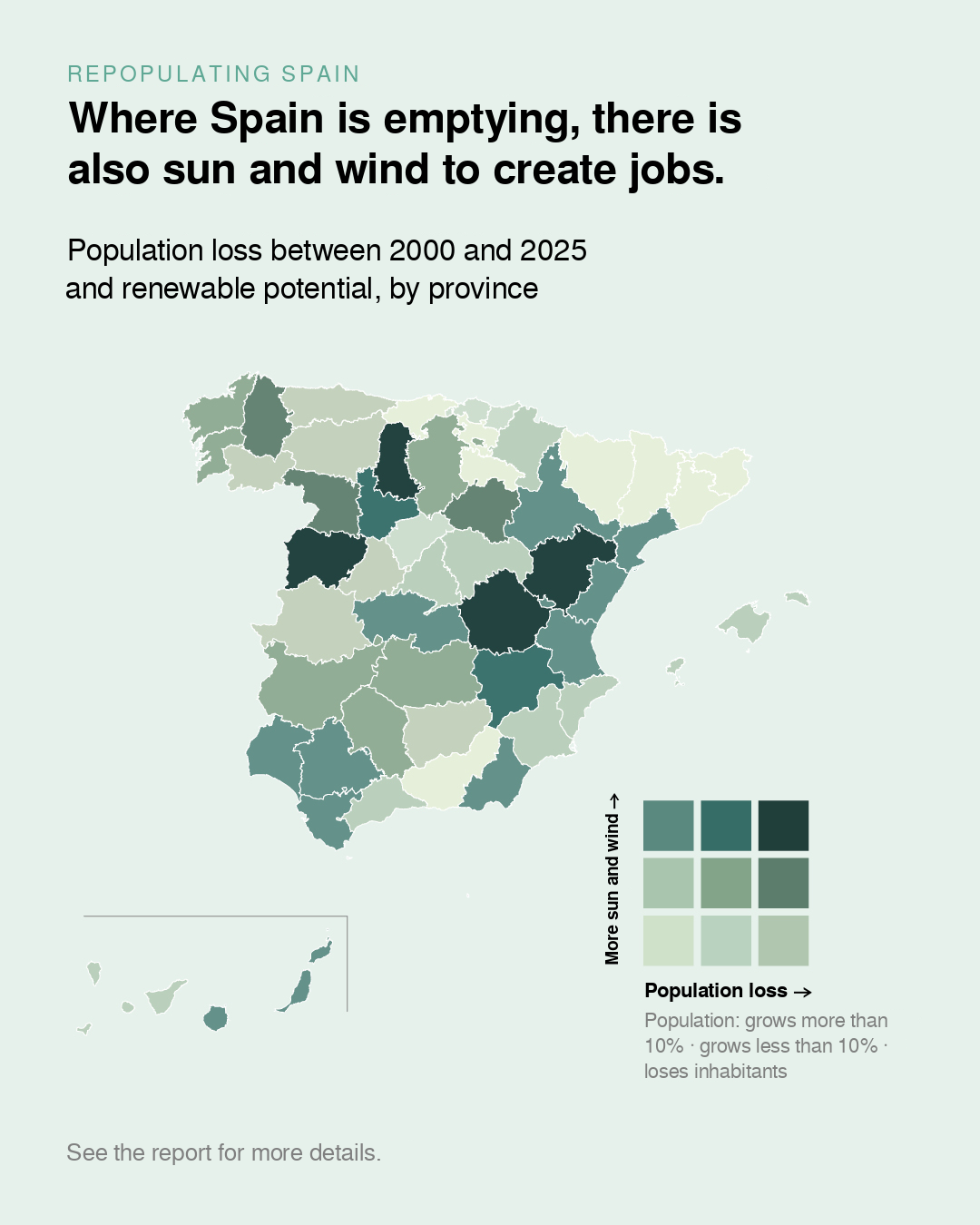
Spain produces some of the cheapest electricity in Europe thanks to the sun and the wind. But that advantage reaches neither the countryside nor industry, and towns keep emptying. We want cheap energy to help repopulate Spain.
In the countryside. Farming is not being strangled by the 2030 Agenda: it is being strangled by the price of diesel and fertilisers. The State must speed up rural electrification with solar panels for irrigation, farm buildings and cooperatives, so that farmers produce their own energy and can also electrify their tractors, and promote regenerative agriculture that needs fewer fertilisers.
And in industry. Guarantees of renewable energy at a stable, low price, for years, for industries that set up in Spain’s emptied interior and create local jobs. This is not about bringing in an isolated factory, but about building entire industrial districts: green fertilisers made with renewable hydrogen, components for renewables and batteries, food processing.
Measure 5
In 2025 Spain had its worst wildfire year since European records began, and in 2026 it suffered the largest fire in its history. And every October, when the season ends, we lay off thousands of forest firefighters, as if the forest stopped existing in winter. A healthy ecosystem is not a luxury: it is critical infrastructure that saves lives, like a hospital or a road.
Civilian Climate Corps. A stable public corps, employed all year round, dedicated to caring for the land: fire prevention in winter and firefighting in summer, restoring rivers and aquifers, adapting to droughts and floods, and technical support for those who want to switch to regenerative agriculture.
Paying to care for the countryside. Those who care for nature deserve to be paid for it. Through the CAP, farmers can be paid for practices that protect us all: clearing and caring for forests, mosaic landscapes that slow fires, regenerating soils that retain water.
Download